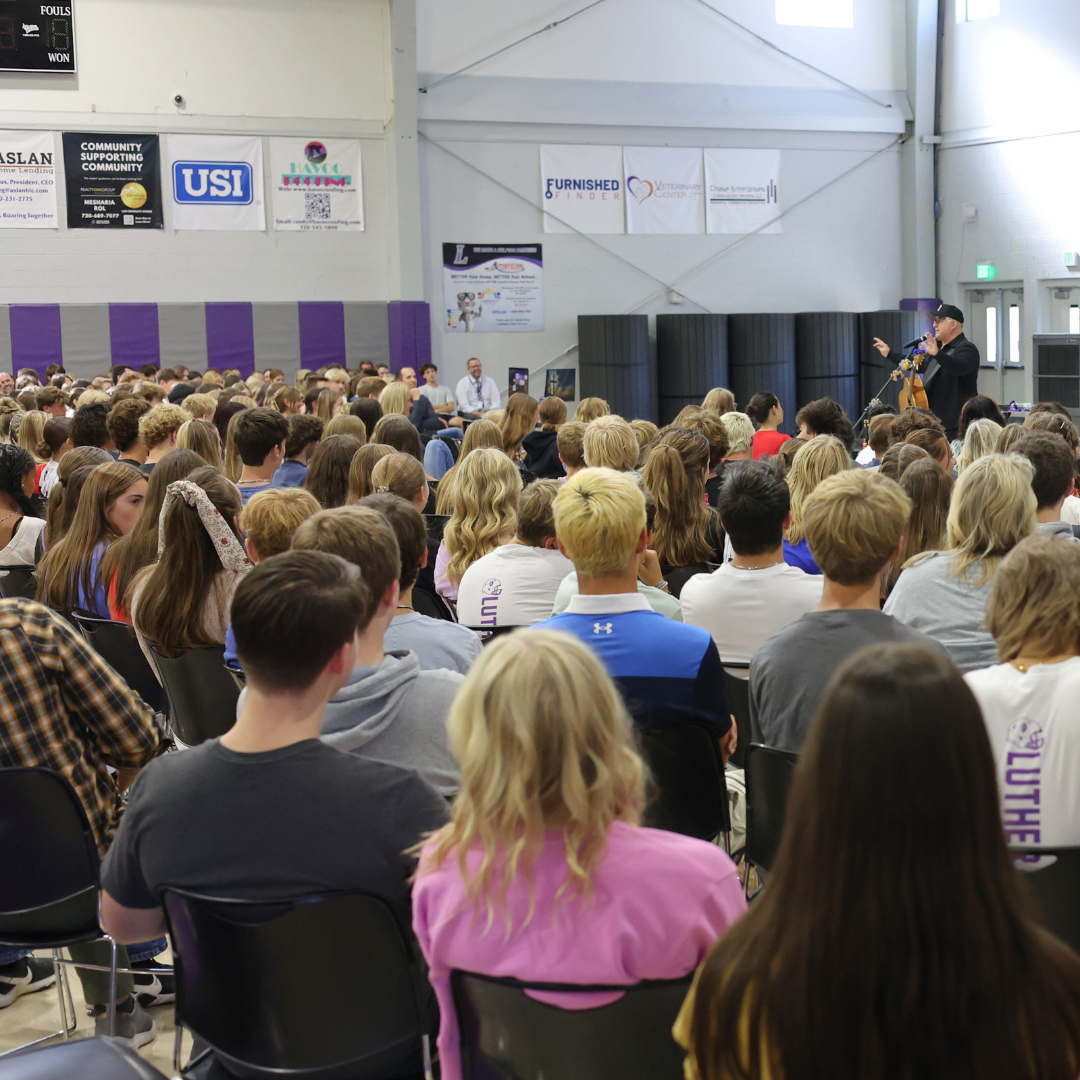
Four years may not seem long to adults, but for high schoolers, it’s a quarter of their lives. These formative years are shaped by five things at school:
-
the adults in the building,
-
being known,
-
the day-to-day culture students experience,
-
what the school believes (how its core values direct the decisions made by teachers and leadership),
-
and how the school guides your student to what’s next.
Where your student spends these years, and with whom, matters.
Below, we break down each of the five formative aspects of high school and how each one looks for Lutheran High School (LuHi) students in grades 9–12 in Parker, Colorado.
1. The adults in the building: why teachers shape the experience most
The teachers and staff students see every day shape how much they learn, how they feel about learning, and who they turn to when something goes wrong. Your student will spend more than eight hours a day with these adults.
Think back to your favorite high school class. Chances are, it was your favorite because of the teacher.
At LuHi, hiring and keeping the best educators is a core value. Executive Director Dan Gehrke often says, "I would trust anyone on staff to give my own kids advice." He also often references Netflix's theory of the "chaos gap": chaos sets in when an organization's challenges outgrow its ability to add high-performing people. As LuHi has grown, the goal has stayed the same: hire good people faster than the school grows.
Teaching is an art. You know good teaching when you see it: an engaged class, students reaching their potential, and challenges tailored to each learner.
On your high school hunt, look for: teachers who talk to and about students by name, and a school that can explain how it hires and retains good teachers.
2. Being known: why every student needs adults who care
Being known means at least one adult at school notices when something is off and knows the student well enough to reach out. A student who feels invisible can struggle even when everything looks fine on paper. That's true in a school of 300 or 3,000.
Once a year, LuHi students take a Student Care Survey to name the staff members they've connected with. When a student hits a hard season, we know who to bring alongside them. More often than not, that connection has already happened organically. Students who feel seen and known can get over life's hurdles.
Look for: a clear, specific way the school makes sure no student slips through the cracks.
3. The day-to-day culture: why structure, expectations, and peers matter
Students do their best when they know what’s expected and see the adults follow through. Clear expectations, consistent discipline, and real attention to each student’s growth free up students to focus on learning and building friendships. When processes are steady and predictable, accountability becomes part of everyday life at school. The peers around your student shape what feels normal, so the character of the student body matters too.
At LuHi, we aim to "spur one another on toward love and good deeds" (Hebrews 10:24). Conflict happens. At LuHi, students are taught to practice biblical conflict resolution from Matthew 18. They learn to go directly to the person who hurt them and talk face to face, and bring in a trusted mediator when needed. Conversations about repentance, forgiveness, and restoration happen here every day.
Look for: how the school handles problems when they arise, and whether expectations are clear and consistently enforced
4. What the school believes: how core values show up in the school day
Every school is guided by core values, whether it names them or not, and those values shape how students are taught, corrected, and treated. It matters that your family agrees with the school's values.
Core values shape schools. Schools shape students. As you consider which high school is the right fit for your student, consider the values behind the school.
LuHi is a Christian school affiliated with the Lutheran Church–Missouri Synod with three core values:
-
we are rooted in Holy Scripture,
-
we provide a highly relational environment,
-
and we hire and retain highly talented teachers.
The last two values are why the adults and being known come first in this list.
The first value shows up throughout the school day. We gather together as a student body and full faculty in chapel every Monday, Wednesday, and Friday. Every student takes a yearly Theology class, and at least 20 hours of service are required from every student each year. We serve because, as 1 John 4:19 says, "he first loved us." LuHi welcomes students from many backgrounds who desire to learn from a Christian, biblical worldview.
Read our guide on why we believe so strongly in Christian education.
Look for: values you can see in daily life, not only in a mission statement.
5. Guiding your student to what's next: preparing for life after high school
An intentional school can clearly describe the graduates it hopes to send out. It also knows that the next step looks different for every student. Some head to four-year universities. Others choose community college, a trade, the military, or the workforce.
Most LuHi graduates go on to a four-year university, and that's why we offer a strong dual-credit program for students to earn college credit during the school day.
We also put weight on the skills that go beyond a transcript: handling conflict well, being comfortable with public speaking, knowing what makes a good question, being on time, communicating clearly, and not being afraid of adversity.
We define what we desire for every graduate through the Hallmarks of a LuHi Grad. LuHi Alum:
-
know Jesus
-
are prepared for the next educational challenge after high school
-
serve others
-
love their community
-
know the answers to the great questions of life: Who am I? What is my purpose? Is there any hope? What is true?
Look for: a school that can describe its graduates clearly and has a plan for students on every path.
Putting it together
The four years of high school will shape your student. Start by naming the values you want in a school and the kind of adults you want around your student. Let these five things guide your search and back up the gut feeling you and your student get when you walk into the right school.
Ten years from now, who do you hope the four years of high school have helped your student become?
Frequently Asked Questions
What shapes a student's high school experience the most?
Five things: the adults in the building, being known, the day-to-day culture students experience, what the school believes and how its core values guide decisions, and how the school guides students to what’s next.
How do I compare high schools beyond test scores?
Look for teachers who talk to and about students by name, a clear way the school makes sure no student slips through the cracks, steady processes for discipline and expectations, values you can see in the school day, and a plan for students on every path after graduation.
Do you have to be Christian or Lutheran to attend LuHi?
No. LuHi is a Christian school affiliated with the Lutheran Church–Missouri Synod and welcomes students from many backgrounds who desire to learn from a Christian, biblical worldview.
Originally published in 2021, updated in 2026 for accuracy.